Structure your collections and their data
Reconcile samples and records, harmonise metadata and document traceability.
Possible deliverables : Reconciled inventory, data dictionary, issue tracker.
Explore collection and data supportLSE BioConsult · Biospecimen Management & Data
LSE BioConsult helps research and laboratory teams structure their collections, improve associated data and organise their workflows.
The aim: improve sample traceability and make the associated information usable for research.
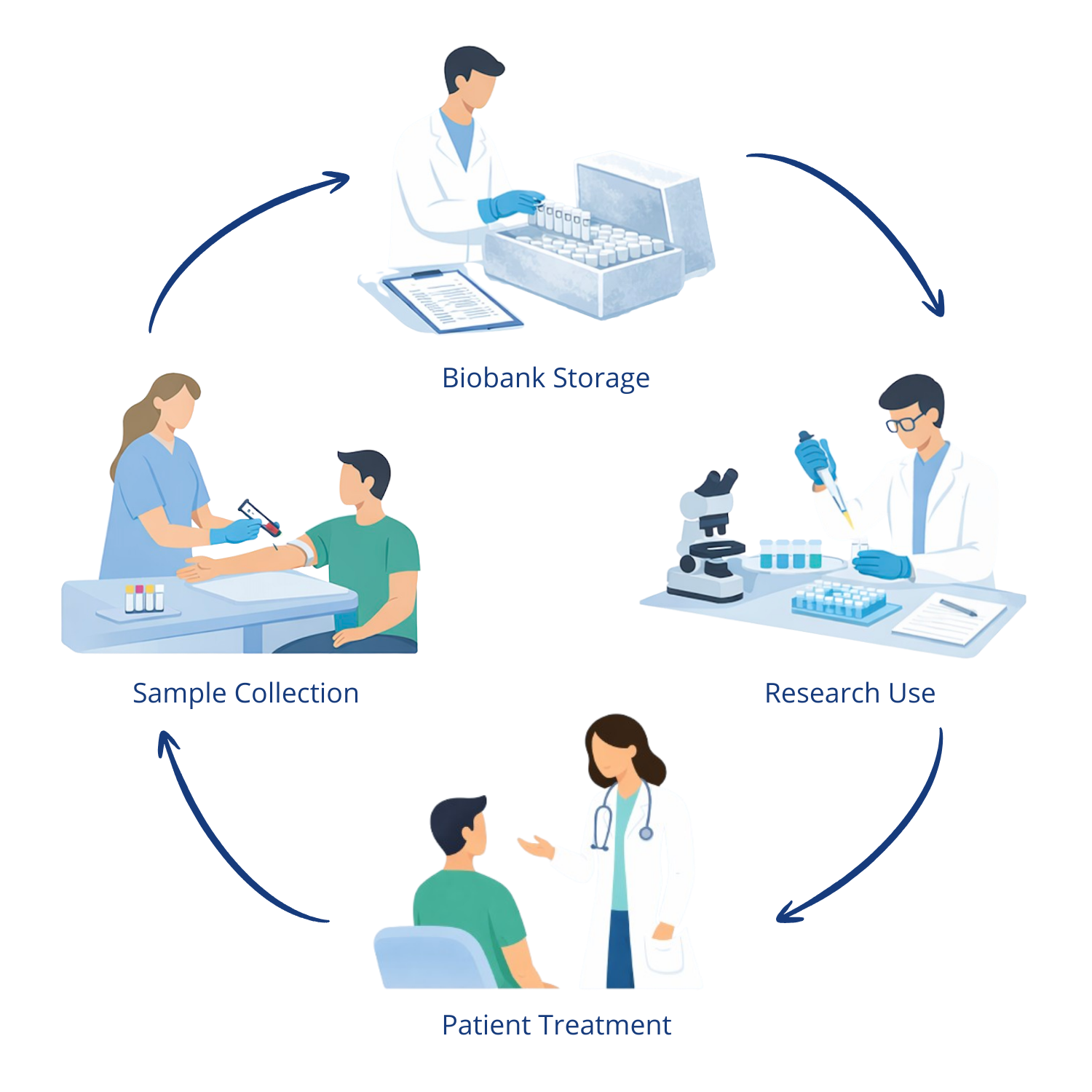
Biobanks, hospitals, research institutes, biotech and laboratories: LSE steps in when your collections, data or operational follow-up need specialised support.
Your collection records are scattered, incomplete or difficult to reconcile.
Your LIMS project requires clearer workflows and data preparation.
A backlog, transition or capacity gap is slowing down your operations.
Reconcile samples and records, harmonise metadata and document traceability.
Possible deliverables : Reconciled inventory, data dictionary, issue tracker.
Explore collection and data supportTranslate laboratory practice into functional requirements and prepare data before migration.
Possible deliverables : Workflow maps, functional requirements, field mapping.
Explore LIMS and workflow readinessTake on defined tasks, address a backlog or coordinate operations during a transition.
Possible deliverables : Tracking tools, procedures, handover documentation.
Explore operational support
Laure Sanvee-Edoh, a biobank management engineer and founder of LSE BioConsult, combines knowledge of biological collections with sample data management.
You work directly with her, in coordination with your laboratory, scientific, data and IT contacts. Her biobanking experience is the foundation of this support.
Meet Laure and explore her approachAn initial conversation establishes your context and objective. We then agree on the tasks, responsibilities and expected deliverables.
At Centre Léon Bérard, Laure contributed to a study of the data associated with 21,389 neuroblastoma samples collected between 1984 and 2024.
The publication describes minimum information criteria and a requalification method to support research use.